

AngL0306@outlook.com
Content
WPC flooring stands for Wood Plastic Composite — a category of rigid core luxury vinyl flooring whose internal structure combines wood fiber or wood-derived materials with plastic polymers to form a stable, waterproof core. Some manufacturers also read "WPC" as "Waterproof Core," which is equally accurate in describing the product's most defining functional feature.
The name, however, has grown somewhat misleading over time. As manufacturing technology evolved, many WPC products on the market today have replaced wood fiber with stone polymer blends or other composite fillers — yet the industry has retained the WPC label because it communicates a specific type of flooring experience: thicker, warmer underfoot, and more cushioned than its SPC counterpart. Buyers who understand this distinction are better equipped to evaluate what they are purchasing.
Structurally, WPC falls within the broader luxury vinyl flooring (LVF) family. Unlike standard LVT (Luxury Vinyl Tile), which is flexible and requires a near-perfect subfloor, WPC flooring features a rigid, foamed core that allows it to float over minor subfloor imperfections without telegraphing them to the surface. This makes it a highly practical solution for renovation projects where leveling the substrate would otherwise add significant time and cost. Explore the full range of wood-plastic composite flooring options available for residential and commercial specification.
Understanding WPC flooring meaning requires looking at what the product is actually made of — layer by layer. A standard WPC plank is composed of four to five bonded layers, each contributing a distinct performance function.
Wear Layer: The topmost transparent coating, typically made from polyurethane (PU) or PVC with aluminum oxide reinforcement. This layer determines scratch and stain resistance. For residential use, wear layers of 12 mil (0.3 mm) or above are standard; commercial-grade products start at 20 mil. Thicker wear layers directly extend the floor's service life under foot traffic.
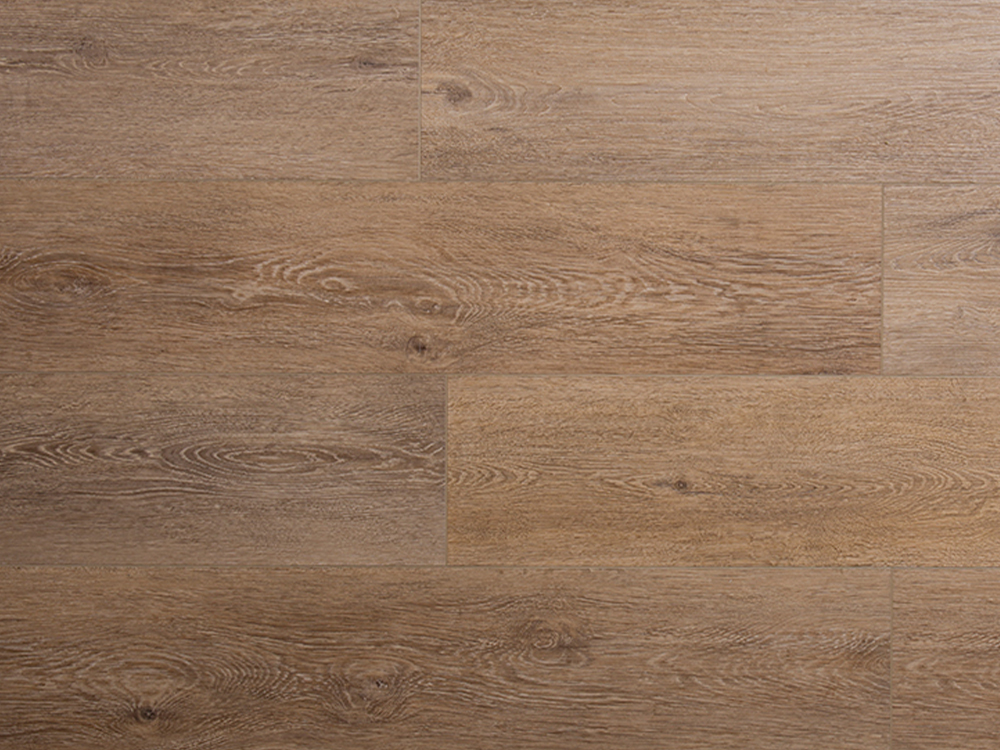
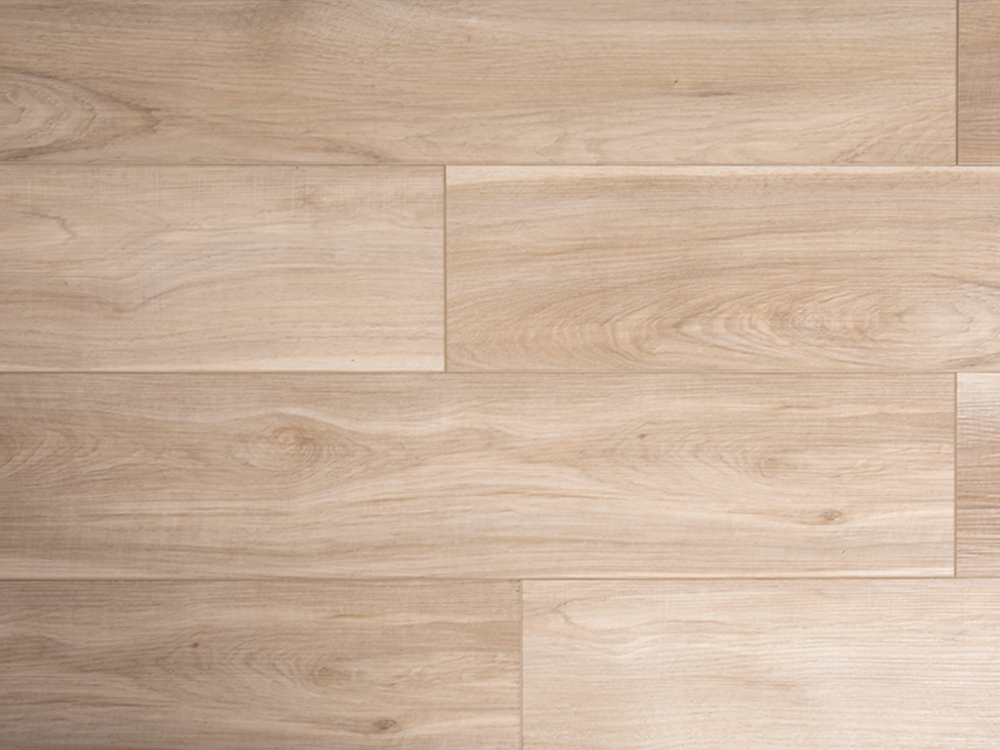
Decorative / Print Layer: A high-definition printed film positioned beneath the wear layer. Advanced digital printing — often paired with 3D synchronized embossing technology — replicates the grain and texture of natural oak, walnut, slate, or stone with considerable realism. The accuracy of emboss-in-register (EIR) production determines whether the surface texture visually aligns with the printed pattern.
WPC Core Layer: This is the defining layer of the entire product. The core is composed of wood fiber, PVC, and calcium carbonate, combined with a foaming agent during extrusion. The foaming process introduces air pockets into the core, reducing its density compared to SPC and giving WPC its characteristic softness and thermal insulation. Core thickness typically ranges from 5.5 mm to 8 mm, making WPC planks noticeably thicker than equivalent SPC options. The classic WPC plank construction exemplifies this multi-layer approach, with each layer precision-bonded for long-term dimensional integrity.
Underlayment / Base Layer: Most WPC products include an attached IXPE or EVA foam underlayment bonded to the bottom of the plank. This layer enhances acoustic performance — reducing impact noise by approximately 15 dB — and adds further cushioning underfoot. Some premium products also feature an optional PVC balance layer to prevent warping under thermal cycling.
WPC flooring's layered construction translates into a specific performance profile that makes it suitable for a defined set of applications. Buyers should evaluate these characteristics against their project requirements before specifying.
100% Waterproof: The WPC core contains no porous wood in its final form, and the entire plank structure — from wear layer to base — is designed to resist moisture penetration. Certified WPC products are typically tested under submersion conditions for up to 72 hours with no swelling or delamination. This makes WPC appropriate for kitchens, bathrooms, laundry rooms, and below-grade applications like basements.
Comfort Underfoot: The foamed core absorbs compressive force, reducing foot fatigue in spaces where people stand for extended periods. Compared to ceramic tile or standard LVT, WPC provides measurably greater cushioning — a meaningful advantage in kitchens and workrooms.
Sound Absorption: The combination of the foamed core and attached underlayment gives WPC strong acoustic dampening properties. This makes it a preferred choice for upper-floor rooms, apartment renovations, and any space where reducing impact noise transfer to the level below is a priority.
Temperature Stability: WPC handles moderate temperature variation well, making it suitable for spaces with seasonal climate changes. Products with underfloor heating compatibility typically specify an upper working temperature — commonly up to 80°C at the surface — which should be confirmed with the manufacturer prior to installation.
Installation Flexibility: Click-lock floating installation is standard across most WPC product lines. The rigid foamed core bridges minor subfloor irregularities, reducing substrate preparation requirements that standard LVT would demand. Most products can be walked on within 24 hours of installation.
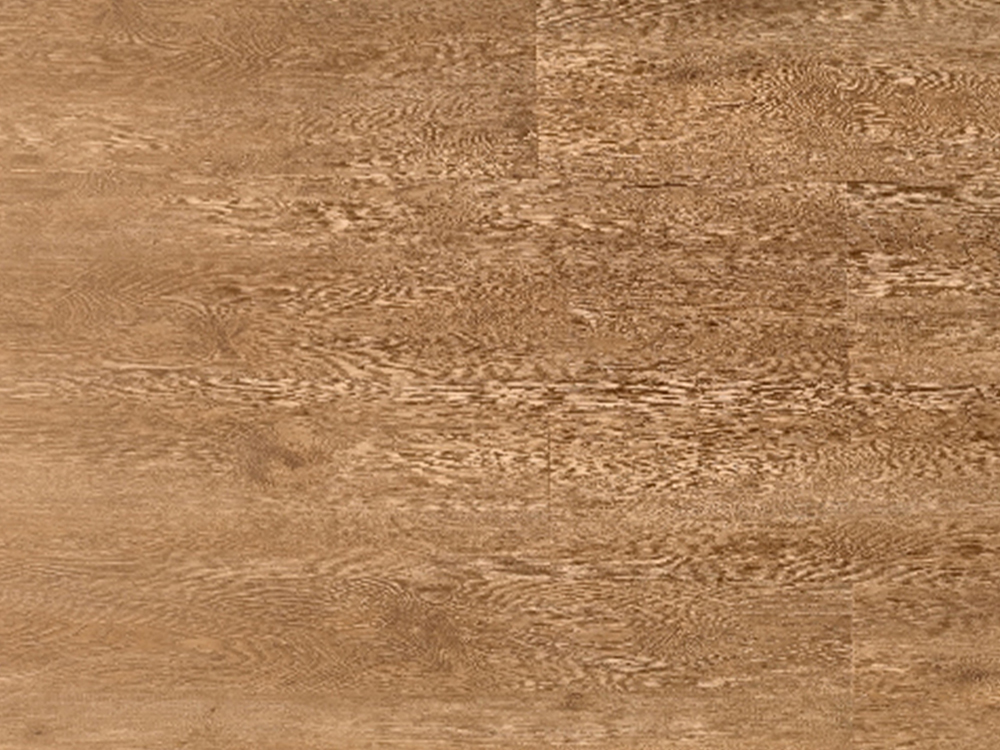
The most common point of confusion in the rigid core vinyl category is the distinction between WPC and SPC. Both are waterproof, both use click-lock installation, and both replicate natural wood and stone visuals. The difference is in the core composition — and that difference has real consequences for how each floor performs.
| Feature | WPC Flooring | SPC Flooring |
|---|---|---|
| Core Composition | Wood/polymer composite + foaming agent | Limestone powder + PVC (no foaming agent) |
| Core Thickness | 5.5 mm – 8 mm | 3.2 mm – 7 mm |
| Underfoot Feel | Softer, more cushioned | Harder, more rigid |
| Sound Absorption | Superior | Moderate (typically requires separate underlayment) |
| Dent Resistance | Good | Excellent (denser core) |
| Thermal Stability | Good | Excellent (minimal expansion/contraction) |
| Typical Application | Residential, moderate-traffic commercial | High-traffic commercial, temperature-variable spaces |
In practical terms: if comfort, warmth, and noise reduction are the primary criteria, WPC is the stronger choice. If the project involves heavy rolling loads, high foot traffic, or significant temperature swings — such as a retail space or warehouse — SPC's denser core provides greater resilience. For a detailed technical breakdown of stone composite construction, refer to the guide on stone plastic composite flooring explained.
WPC flooring's combination of waterproofing, comfort, and acoustic performance makes it well-suited to a defined set of environments. Matching the product to the right space ensures long-term performance and avoids misapplication.
Residential Living Areas and Bedrooms: WPC's cushioned underfoot feel makes it a natural fit for spaces where occupants spend time standing or walking barefoot. The attached underlayment eliminates the need for a separate acoustic layer, simplifying the installation process.
Kitchens and Bathrooms: The 100% waterproof core handles routine spills, steam, and humidity without risk of swelling or delamination — performance that traditional laminate cannot reliably deliver. The slip-resistant surface options available in most WPC lines add a safety dimension appropriate for wet areas.
Basements: Moisture infiltration from below-grade slabs is a persistent concern in basement installations. WPC's impermeable core and floating installation method — which does not bond the floor to the slab — allows for moisture vapor movement without transferring damage to the plank surface.
Multi-Level Residential and Apartment Spaces: The attached IXPE underlayment in WPC products significantly reduces impact noise transfer between floors, making it a preferred specification for apartment renovations and multi-story homes where acoustic privacy matters.
Moderate-Traffic Commercial Spaces: Retail boutiques, hospitality lobbies, healthcare waiting areas, and restaurant dining rooms benefit from WPC's combination of realistic visual appeal and durable waterproof construction. For very high-traffic commercial environments, SPC or a commercial-grade WPC with a 20 mil or heavier wear layer should be specified. For complementary product pairings, see the range of luxury vinyl tile flooring alternatives suited to varied commercial footprint requirements.
Not all WPC products deliver equivalent performance. Several technical and certification factors separate products that will perform reliably over a 15–20 year lifespan from those that will begin showing wear and dimensional instability within a few years.
Wear Layer Thickness: The single most important specification for durability. Residential applications require a minimum of 12 mil; spaces with pets or moderate foot traffic benefit from 20 mil. Commercial projects should specify 20 mil or above. Confirm this figure — not just the total plank thickness — before purchase.
Indoor Air Quality Certifications: WPC flooring is a composite product that includes PVC, adhesives, and surface coatings — all of which can emit volatile organic compounds (VOCs) if not properly tested. Two certifications indicate verified low-emission performance: FloorScore, developed by the Resilient Floor Covering Institute (RFCI) and SCS Global Services, evaluates hard surface flooring against California's indoor air quality standards. GreenGuard Gold, administered by UL Solutions, screens products for more than 360 VOCs and applies the stricter California Section 01350 testing protocol — making it suitable for schools, healthcare environments, and homes with young children. Review the full UL GREENGUARD certification criteria at the official UL GREENGUARD certification standards page.
Click-Lock Precision: The locking profile machined into the plank edges determines installation quality and long-term joint stability. Poorly milled profiles create gaps, allow moisture ingress at seams, and generate noise underfoot. Request tolerance specifications or sample planks to verify locking system integrity before large-volume procurement.
Dimensional Stability Testing: For projects in climates with significant seasonal temperature variation, confirm the product's tested expansion and contraction range. WPC products vary — those with higher stone content in the core will outperform purely polymer-foamed products in thermal stability.
For installation, ensure that appropriate compatible flooring accessories and trims — including transition strips, baseboards, and thresholds — are sourced from the same production standard as the floor itself. Mismatched accessories are a common source of VOC exposure that certified flooring products alone cannot offset.


 皖公网安备34182102000331号
 Indoor Plastic Wood Flooring Manufacturers

 English
 Español
 Deutsch