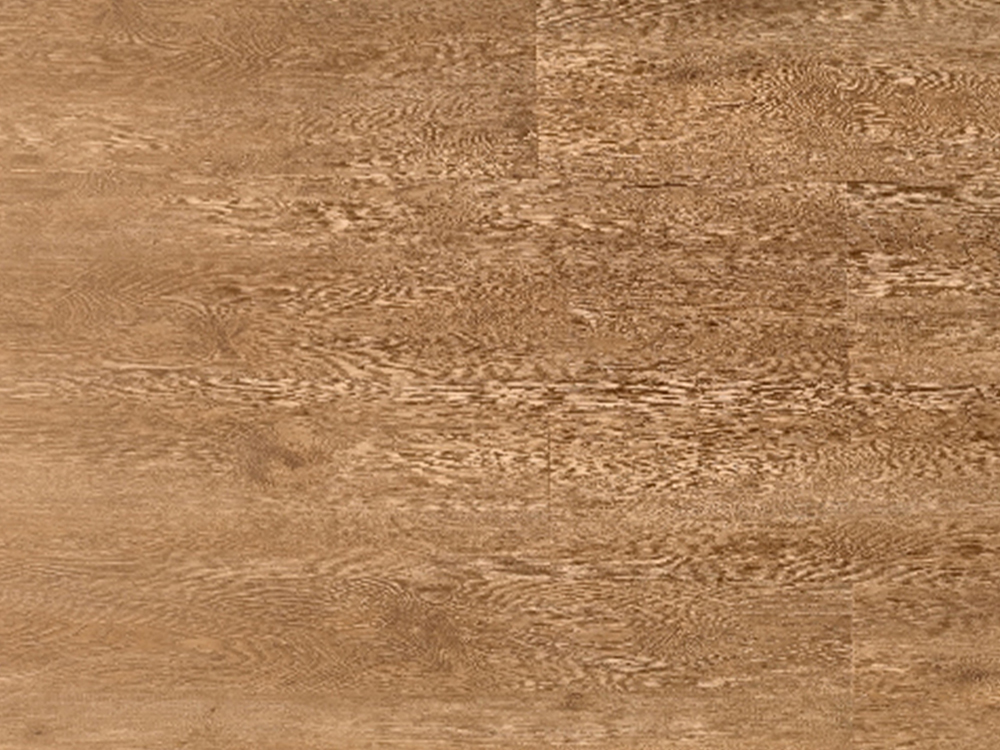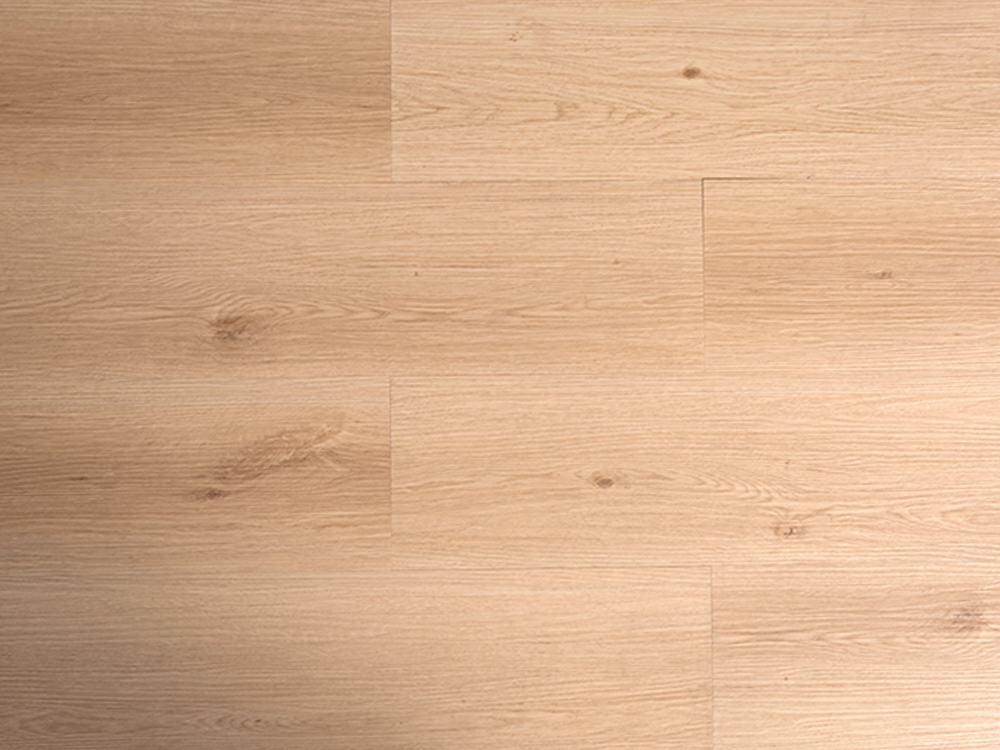


AngL0306@outlook.com
A leaking dishwasher hose settles this comparison faster than any showroom sample. Leave a laminate plank and a hybrid plank in standing water overnight: the laminate swells along its joints and never returns to its original thickness, while the hybrid plank, an SPC or WPC board built on a rigid composite core, wipes dry and stays flat.
The conclusion follows from that single fact. Choose hybrid resilient flooring for kitchens, laundries, basements and any slab that sees moisture; choose laminate when the room stays dry, the budget is tight and you want the hardest surface at that price. The rest of this article explains why, and where the rule bends.
Content
Hybrid is an umbrella term covering SPC (stone polymer composite) and WPC (wood plastic composite). Both use a rigid core of limestone powder and PVC, a printed decor film, a transparent vinyl wear layer and usually a UV-cured top coat. Boards are solid, foamed or built in an ABA sandwich with a balancing layer on the back to hold the plank flat through temperature swings. That last format is what most commercial projects specify when long runs have to stay flat.
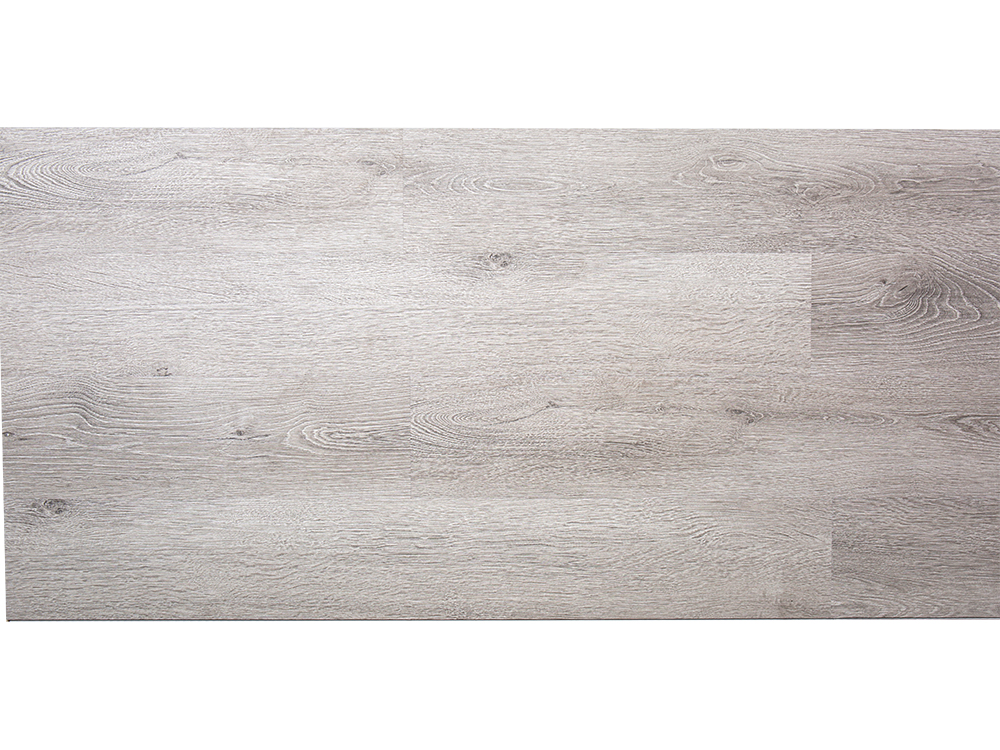 ABA Structured SPC Rigid-Core Flooring for Stable SpacesSPC plank with PVC wear and balance layers for dimensional stability in temperature- and humidity-variable residential or commercial installations.View Product →
Laminate runs on a different platform. Its core is high-density fibreboard, the decor is printed paper, and the surface is a melamine overlay loaded with aluminum oxide. It is a wood-based panel wearing a printed skin, and every one of its limitations traces back to that fibreboard core.
The practical consequence: laminate behaves like wood when it meets water and like a hard mineral surface when it meets a sharp edge. Hybrid stays plastic all the way through, stable in moisture, slightly forgiving underfoot and predictable in service.
HDF is hygroscopic. The entry point is the joint: a spill that sits along a seam wicks into the core, the fibres swell, and the joint lifts into a ridge that cannot be sanded out. Manufacturers offer moisture-resistant cores and quote swelling limits, but moisture resistant is not waterproof, and a slow leak under a refrigerator will still find the board edges.
Hybrid cores do not absorb water. A PVC-based core and vinyl wear layer stay dimensionally stable when wet, which is why SPC and WPC planks are routinely specified for kitchens, laundries and slab-on-grade floors. This does not turn the floor into a waterproof membrane: water still passes through the click joints and reaches the subfloor, so a flooded room has to be dried either way.
Where standing water is a normal condition rather than an accident, the click profile, the subfloor and the sealing of perimeter joints matter as much as the core. For that narrower case, this guide to SPC rigid core flooring in bathrooms walks through the conditions and the limits.
On paper, laminate wins the surface-hardness argument. Its melamine overlay with aluminum oxide is genuinely hard, and AC3 to AC5 abrasion ratings give buyers a number they can compare. A quality AC4 laminate resists fine grit scratching better than most vinyl wear layers, which is one reason it still dominates in bedrooms and living rooms.
In practice, the margin narrows. Laminate's weak point is impact and edge chipping: a dropped pan can fracture the surface layer, and once the decor paper is exposed, that plank is finished. A hybrid surface is softer and can scuff under heavy furniture, but the core absorbs impact slightly and chipping is rare. On the hybrid side, wear layer thickness is the figure that matters: 0.3 mm is a residential floor, 0.5 mm and above is where commercial specifications start.
Two honest rules apply to both. Dark, high-gloss surfaces show scratches regardless of material, and any floor that receives tracked-in grit daily will fail early without entrance matting.
Both products are normally installed as floating click floors, so labour starts out even. The differences appear in preparation:
If quick repair matters, meaning one damaged plank is swapped without lifting the rest of the floor, a modern click-lock WPC board does the job with no adhesive and no downtime.
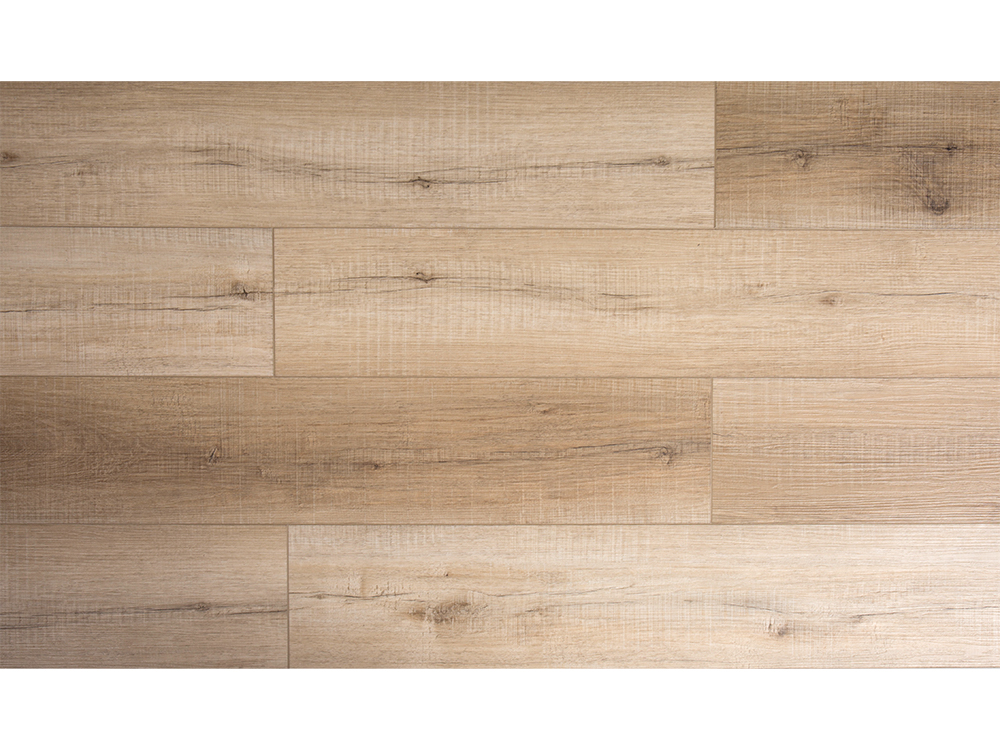 WPC AB Structured Click-Lock Flooring for Cost-Effective InteriorsWood-plastic composite flooring with PVC surface and click-lock installation, positioned for regular homes and offices where quick, glue-free repair matters.View Product →
| Attribute | Hybrid resilient (SPC / WPC) | Laminate |
|---|---|---|
| Core | Limestone and PVC composite, water stable | High-density fibreboard, hygroscopic |
| Water behaviour | No core swelling; joints can still leak | Edge swelling, permanent joint ridging |
| Surface | Vinyl wear layer, typically 0.3 to 0.55 mm | Melamine with aluminum oxide, AC3 to AC5 |
| Impact and chipping | Chipping rare, scuffing possible | Surface can fracture, edges chip |
| Underlay | Usually pre-attached acoustic pad | Separate underlay and vapour barrier |
| Subfloor tolerance | Rigid SPC least forgiving | Slightly more tolerant of minor dips |
| Underfloor heating | Commonly approved with a temperature limit | Product-specific approval |
| Typical service life | 15 to 25 years | 10 to 15 years |
| Material price | Higher | Lower |
Use the table to screen materials, not to settle the purchase. Two products inside the same column can differ more than the columns differ from each other.
Laminate usually wins the first invoice. Per square metre, a mid-range laminate generally costs less than a comparable hybrid plank, and the gap is wide enough to drive the decision on its own. It narrows once the full bill is counted: laminate needs underlay and, over concrete, a vapour barrier, while most hybrid boards arrive with the pad already bonded to the back.
Lifespan tends to reverse the result. Laminate is commonly quoted at 10 to 15 years in residential use and hybrid at 15 to 25, with the difference concentrated in rooms where water and traffic meet. Neither floor can be sanded and refinished the way solid timber can, so the practical question is how often you are willing to repeat the installation.
Most flooring disputes trace back to specifications that were never written down. Ask for these figures in writing, whichever material you pick:
Suppliers who publish these numbers make the comparison straightforward; a resilient flooring manufacturer that lists core density, wear layer and certificates up front is easier to audit than one that answers by brochure. Trim and transition profiles deserve the same attention as the planks, because a floor is only as finished as its skirting, reducers and stair nosings, and mismatched thicknesses are the most common complaint at handover.
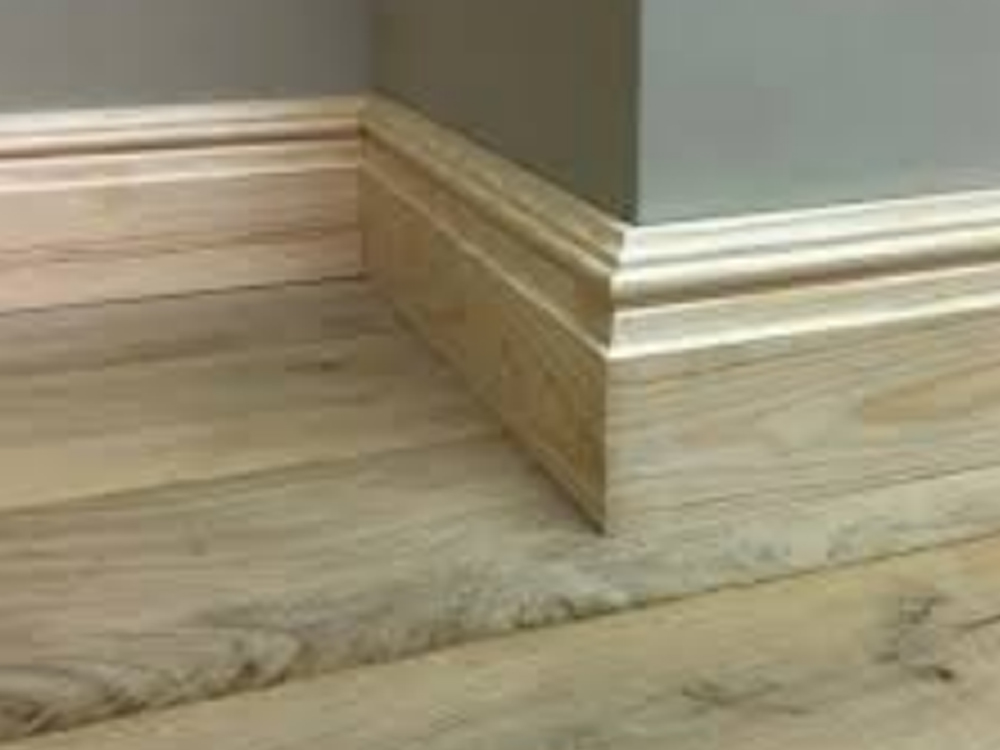 Bamboo Wood Fiber Skirting Board for Floor EdgesPVC-coated bamboo composite skirting in wood or marble patterns, used to finish flooring edges and protect walls from impact and moisture.View Product →
Hybrid resilient flooring and laminate are both sound products built to survive different conditions. Water decides the argument more often than anything else, so start with the room and the subfloor, then compare wear layers and prices inside the material you have already chosen. A floor that suits its room will outlast a cheaper one that does not.


 皖公网安备34182102000331号
 Indoor Plastic Wood Flooring Manufacturers

 English
 Español
 Deutsch